The governments of the Gulf Cooperation Council (GCC) states have long been searching for the best way to diversify their economies, and in the wake of falling oil prices, they have accelerated their search. Saudi Arabia and the UAE recently launched massive funds with the goal of transforming their economies into “knowledge” format, with the assistance of reputable foreign consultants, and making use of the experiences gained from the partially successful diversification efforts of countries such as Malaysia and Mexico. Based on the recommendations of the International Monetary Fund (IMF), which include the substantive studies produced by economists Dr. Reda Cherif and Dr. Fuad Hasanov, the plans focus on improving merchandise exports, especially in markets that continuously require new products and innovations, and that depend upon accumulated knowledge. Such activities have positive “spillover” effects on other sectors, as they result in a highly-skilled and flexible workforce, able to respond to the needs of global markets. This is critical for the GCC countries as their harsh desert environment renders them highly dependent upon imports that need to be financed by such exports. As an example, the GCC countries should consider investing in renewable energy, as it is a dynamic sector that generates desirable jobs.
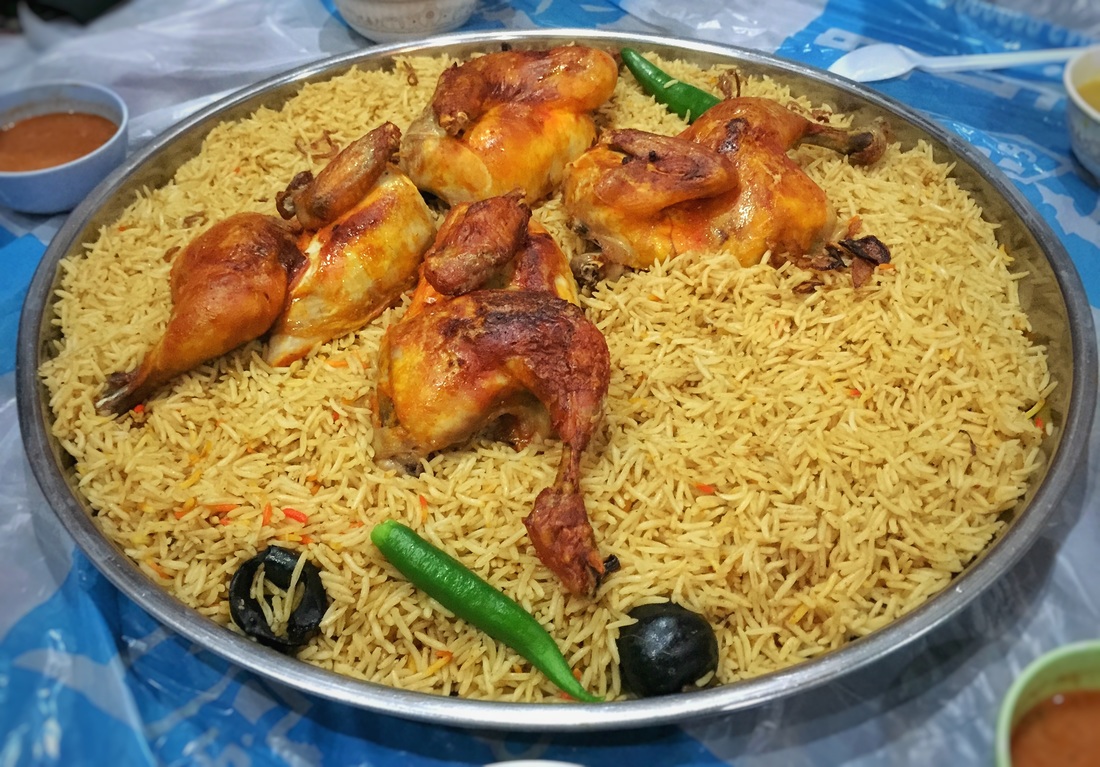
Despite the soundness of such strategies, they need not be adopted at the expense of all other possibilities, especially if there exist alternative diversification strategies that are cheap, and that make use of the workforce’s prevailing skills, rather than requiring starting from scratch. In 2013, the UK’s Department of the Environment, Food, and Countryside released a statement outlining the “Food is Great” campaign, with the aim of increasing UK food exports. Environment Secretary Owen Paterson declared that “there are huge opportunities for British food companies to export all over the world and I’m determined to help our firms exploit them.” The GCC countries may well benefit from launching a similar campaign, especially given the presence of a strange phenomenon in the Gulf at present: GCC nationals love traditional Gulf dishes, such as “kabsa”, “mashkhul”, and “rangina”, as do many foreigners who visit the Gulf’s shores; however, one rarely finds a Gulf restaurant in the world’s capitals, Gulf spices in supermarkets outside the GCC, or Gulf cooking programs on western culinary channels. This is particularly unfortunate in light of the fact that the Gulf peoples are among the most hospitable in the world; at present, this is evident only to the region’s visitors, whereas non-visitors—who make up the vast majority of the world’s citizens—are unaware of the tradition of Gulf hospitality, because GCC citizens make no effort to export it. Naturally, the idea is not for the GCC to build its economy upon exporting “kabasa”; however, such activities do have several noteworthy advantages. First, unlike some of the more ambitious projects associated with knowledge economies, exporting food via restaurants, specialist grocers, and so on, does not require a huge amount of capital, cutting-edge technology, foreign experts, or detailed R&D. In fact, the key factors are present and ready for deployment. Second, some of the associated job opportunities are highly compatible with modern GCC culture. Chefs can work from home, with flexible hours. Commercial skills can be obtained via internet MBA programs, which are widely available and modestly priced. There is an additional advantage which has an enhanced value at present: exporting food via restaurants and other means can play a role in improving the image of the GCC countries, because it connects GCC citizens with their foreign counterparts, and creates mutual affection. The world’s peoples welcome foreign diasporas such as Indians, Chinese, Lebanese, Italian, and Japanese, because of the delicious food products that the introduce into the receiving neighborhoods via restaurants and groceries. Unfortunately, non-GCC citizens, particularly non-Arabs, often regard the people of the Gulf as unproductive, and see little role for them in modern art, culture, and civilization, beyond the oil located in the GCC. This is partially due to GCC citizens’ paltry efforts at showcasing their genuine cultural achievements to the rest of the world. Secretary Paterson’s statement drew attention to the role that food exports can play in creating demand for other British products, and in improving the overall brand of the UK—benefits currently foregone by the GCC. If Gulf citizens are convinced of the returns to exporting traditional foodstuffs, how can they make use of the British experiment? The UK’s plan was based on the following steps, all of which should be adopted by the GCC. First, creating joint government-private workgroups to support food exports, and to determine priorities. Second, creating a well-defined Gulf brand to improve the visibility of GCC foodstuffs in global events and exhibitions. Third, marketing campaigns that focus on the GCC’s strengths in food, and that make use of the best available opportunities. Finally, working to overcome trade barriers that impair GCC exports. Beyond this, there is an additional benefit to such enterprises, relating to GCC unity and identity. Gulf dishes are generally homogenous—there is no significant difference between a Bahraini kabsa and a Kuwaiti one, nor does Qatari hospitality differ from that found in the UAE. This offers an opportunity to create a genuinely Gulf commercial enterprise. The Federation of GCC Chambers can play a role, as can the GCC Secretariat General, and other GCC institutions, as at present, there are scarcely any Gulf products in global markets. GCC foodstuffs can be the departure point for a Gulf commercial strategy. One hopes that in the future, the GCC economy will successfully transit to a knowledge form, with a highly-skilled workforce capable of competing with the workforces of South Korea, the USA, and Germany in technical exports. Such a plan need not crowd out efforts at exporting Gulf hospitality; in fact the two may complement each other, by helping to build the Gulf brand. In any case, as the British author Virginia Woolf once remarked: “One cannot think well, love well, or sleep well, if one hasn’t dined well.”
0 Comments
Leave a Reply. |
Omar Al-Ubaydli
This is where you can find all my articles, as well as some of my interviews and media mentions Archives
June 2020
Categories
All
|
 RSS Feed